Showing posts with label vegetable gardening. Show all posts

Thursday, 21 May 2020

Pea Day Battle

Peas are supposed to be easy to grow - and they are - but they can also be difficult! These difficulties, namely stolen seeds (I am watching you pigeons), are easily overcome but I still found myself with an entire row of seeds disappeared. Now before I completely blame the wildlife, I also had seeds that rotted in containers and I'm not sure why. Over-wet conditions is the obvious reasons. I had read that pea seeds need a lot of moisture to germinate but perhaps that is not accurate. The seeds were only a year old so should still have life in them.


Anyway I purchased fresh seeds (Irish Green Pea and Sugar Snap - not easy to obtain with the massive demand at the moment) and sowed another batch outside in a window box which I wrapped in netting. They came up beautifully. This week, when the plants were about 2.5 inches high, I planted them in the same spot as the evaporated seeds and covered them again with the netting by securing it on to the wire frame support that they will grow against.


Then I planted another batch of seeds in the now empty window box and made a protection run for them using another wire frame resting against the already standing one flanked with my potted cherry trees and held in place with containers of potatoes. 


I can just imagine a few hens running in and out that wire run - perhaps the next step for me.

Wednesday, 6 May 2020

Garden Diary: 2nd May 2020


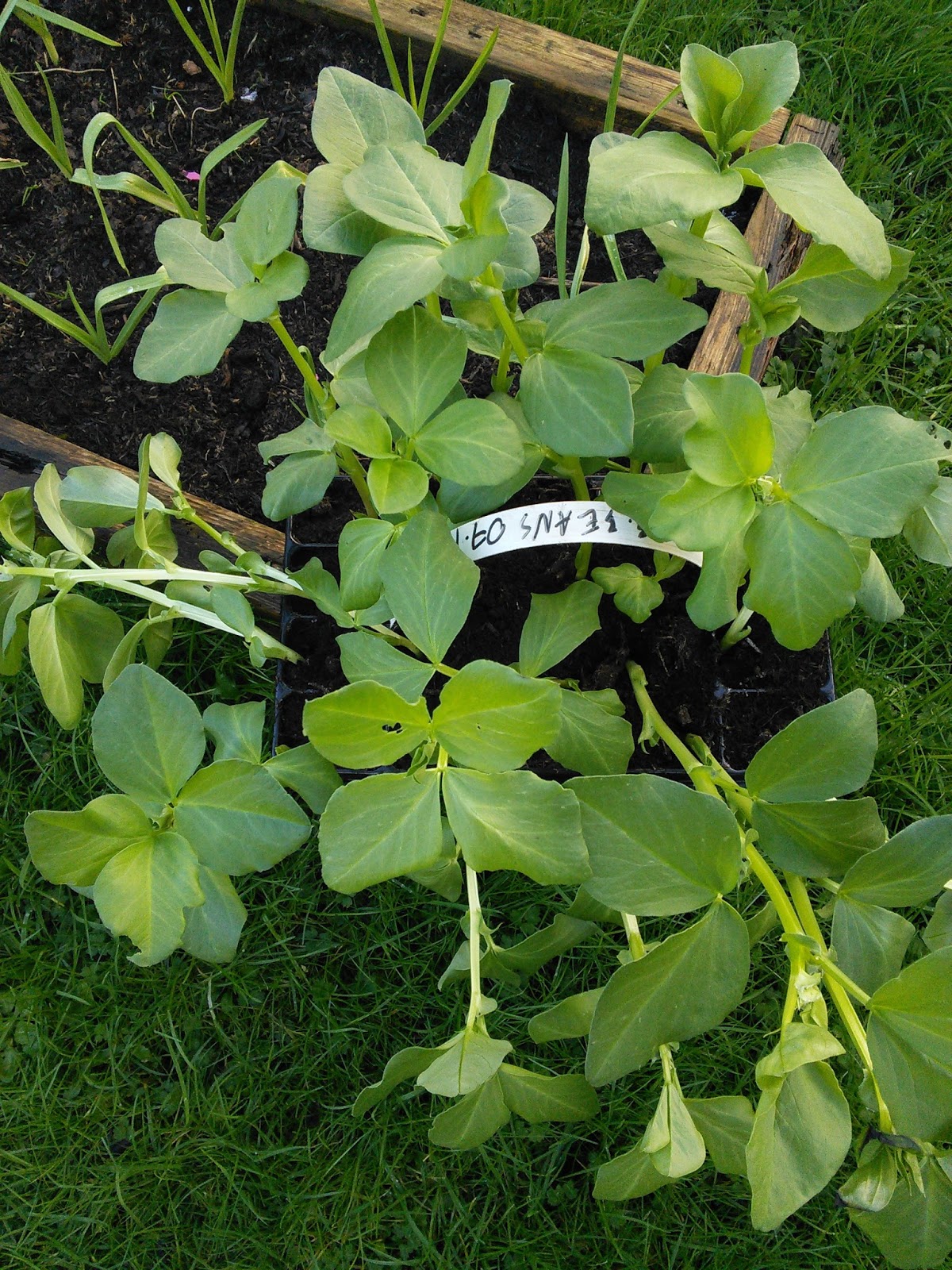
The food garden is picking up. It's mainly beans, potatoes and raspberries showing significant growth.The big plant to the front is a flower, Yarrow, which will be good for pollinating insects, who in turn will hopefully repay me by eating the aphids that are certain to attack the beans.


For the longest time it was too early to plant anything outside and all of a sudden, it's May! I planted some peas today and when I was writing the label I noticed the month and thought, finally parsnip time! I had a spot reserved in the same bed as potatoes, carrots and beetroot and I spent a bit of time breaking the soil down to crumbs before sowing the seeds. In a few weeks I'll do another sowing.


Back to the peas, my pea seeds are disappearing. I know birds are a major pest outdoors but even my indoor sowings seems to be evaporating. I'm reading now and wondering if I need to water them more. Anyway the seeds I sowed today (Irish green pea from Brown Envelope Seeds) were put in a window box with an net wrapped around it so if these fail, I'm out of ideas.


I am spotting new carrot seedlings every day, thankfully. I was starting to get worried about my 5 year old seeds.


Beetroot is coming up fine and I successfully transplanted some from seed trays but I fear how much damage the slugs will do. We have a ton of brambles in the garden, I might try laying some down to block easy access. Actually, no time like the present. Be right back......

Okay I did it, beetroot protectors that look like satanic symbols:


My pak choi and wong bok never materialised but I have more planted in seed trays so all is not lost yet. I also have purple sprouting broccoli, leeks, courgettes and cauliflower in trays, slowly germinating.

That's all I can think of. Happy gardening.


Tuesday, 17 March 2020

Garden Diary: 16th March 2020


I've taken over the front porch for my seedlings and instructed everyone to use the backdoor. Last year I planted my indoor seeds on the south facing window sill of the garage but it was too much sunlight for the delicate baby plants and the spiders, christ the spiders that made their homes in and around the module trays. I am a friend of arachnids and very respectful but there are specimens living in there that are historical and huge. Anything massive I find in the house is released into the garage (thankfully not adjoined) and I'm not too eager to meet them again. At the moment I am pulling out empty pots from a big cardboard box and am physically shivering in fear what is living among them.

I am mindful that April to May is really the ideal time to plant seeds in Ireland and if you wait until then, the outdoors will take care of them for you, but for hobby sake I have planted some spinach, peas, leeks, pak choi and cabbage indoors. These are all quite cool weather plants and are some of the best choices for early planting. I've also planted sunflowers, borage and corncockle.

I've used egg boxes for cabbage and toilet roll inserts for leeks.


The little plants you see are Echinacea pow wow (coneflower) that I grew from seed last year but never made it in to the ground and never flowered. These are perennial plants, which any gardener knows are worth a lot, so I can't wait to get them into the garden and hopefully enjoy some flowers this year. They should attract a lot of butterflies. Last year my wallflowers and sunflowers were my strongest butterfly charmers.


I have broad beans coming along outside, following planting in December, and garlic is poking it's head through the soil. Perennials are the raspberry bushes. Once early April comes I will plant potatoes, early carrots and beetroot outside, plus additional sowings of spinach, peas and pak choi. May will welcome sowings of parsnips, courgette and purple sprouting broccoli plus more salad leaves, peas and beetroot. There is probably more but that is really a good choice of plants for us, based on what we eat. I'm forgetting herbs... coriander and thyme must go in. I think I have outdoor basil seeds that did well for me before. Oh I have a big rosemary bush out the front that I use all the time, including for the chicken and roast veg that I just took out of the oven.

That's all I have to say right now. Good gardening.

Saturday, 23 November 2019

Using Seaweed in the Garden


Early Winter is a great time to put fresh seaweed on your empty beds. I just gather the wet seaweed that washes up on the beach (not the stuff still growing attached to rocks) and lay it out on the beds and let the rain wash it clean. By Spring it will have decomposed into the bed. It can get a bit glutinous and unappealing during this process but unless you are hoping to have quality time hanging out beside it, it's nothing that will bother you. You could also cover with soil.

The above photo is a bag of seaweed I collected on my local beach last week. I tried to avoid the large stems that are often attached as they are slower to break down, although as I am typing I am recalling someone telling me that the stem is the most nutritious part.... not sure if that is a real memory. Seaweed definitely improves the soil. My main vegetable patch in my old house produced its best crops in the season directly after my first application of seaweed. The effect was unmistakable.

And thanks to my penchant for taking photos of the garden constantly, I have before and after photos. The first photo was taken in November and the second photo was taken in the following July:


Not only does applying seaweed cover the bare soil reducing leaching of existing organic matter, it keeps the soil moist and adds nutrients including nitrogen, potassium, phosphate and magnesium. It also contains elements that plants need in small amounts like iron, manganese, copper, boron and zinc, which can be lacking in other fertilisers. It doesn't contain any weed seeds either. You can safely apply fresh seaweed directly as a mulch to your growing crops as well as digging it in to the soil. Opinions vary as to whether you should rinse it first or not. Some people think the salt will deter slugs, others say it might damage certain plants.


This is my new garden where I am just beginning my vegetable patch. I made a few beds last year which produced some beautiful vegetables but I've decided that they are too close to the septic tank for comfort. I'm worried about contamination in the soil from the soakaway. The following photo is the other side of the garden. All I've done here so far is cover three areas with large pieces of carpet to kill off the undergrowth. The carpet has been down two months. One bed has been covered with seaweed this week, and two more to go. For the other two beds I am going to shovel a load of compost from my garden heap on to the bare soil and then cover with seaweed. I am significantly excited writing this. Better get my wellies out tomorrow.


Monday, 8 July 2019

Vegetables as Flowers

I had my finest specimens of Pak choi ever this year and they tasted...well I haven't a clue. In case you haven't read my recent posts, we bought a house last year so this is my first gardening season in our new home. We have just over half an acre of garden including a large secluded sheltered sunny area - perfect for gardening except for the septic tank. I have no idea if any part of the area is safe for growing veg. It's a big space but I'd only be guessing where the pipes run and I'm not brave enough. I am planning raised beds even though some sources recommend not putting any structures on the leach field of a septic tank. We'll see.


Anyway, my Pak choi. Big beautiful unblemished plants.


They got a lot bigger than that but annoyingly I neglected to take a photo of them before they flowered, which is what I want to talk about. The only reason I let them go to flower is because I was afraid to eat them and was enjoying looking at them so much. Here is a photo of my pak choi blooming it's long flower stalks full of small sunny yellow blooms:


Pak choi is a brassica so I was immediately reminded of my purple sprouting broccoli plants of yore. This is a photo of some of my 2015 plants:


One reason you might let a vegetable plant go to flower is to collect the seed that will eventually come from the flower. To do this, using broccoli as an example, you do not harvest all the broccoli but allow some of the heads to stay on the plant. Eventually the tightly packed purple heads will burst into flower. When the flower dies you will be left with a seed pod containing green seeds. Allow the pods to dry on the plant and the seed is now dark grey/black and is ready to be harvested. The seed can be stored and planted to grow new vegetables and it is at that level of gardening that you get supreme satisfaction.

Another reason to let veg flower is, as I have discovered this year, they are excellent hosts to beneficial insects. I noticed last week that my pak choi flowers are swarming with the well-known pollinators hoverflies. Here are some pics:


A darker coloured one:


And today I snapped numerous red soldier beetles, or Rhagonycha fulva. This is their mating season and I was happy to read that the adults feed on aphids while their larvae prey on slugs and snails. This might be the most perfect insect I've ever met!


I am now really excited to experiment with more vegetables to see what flowers they produce and what insects they bring to the garden. It is almost as thrilling as eating them.

Wednesday, 8 May 2019

Garden Diary 5th May 2019


I had resigned myself to holding off on a lot of planting until May as there is really no point in trying too early unless you have a really good setup with artificial heat, but I'm starting to panic that Im too slow and conservative with my seed sowing. Any way, I am proud of a few things.

I am terrible at seeing things through to the end, with a few shortcuts on the way, so I was delighted to make a decent go at planting my peas as shown in the following photo:


In the photo you can see that I have erected a metre high wooden frame covered in wire by hammering wooden stakes to it and burying them in the ground. Some of the wood I used was cut offs from our laminate floor which was no fun to hammer a nail through. Good indication of the quality of our flooring, bad for my poor index finger on my right hand which got injured in the process. This standing frame will act as support for the greenshaft peas I have planted. Old scratched dvds have been hung on string from the top of the support to act as bird scarers as they blow around and glimmer in the sun. I have planted the peas in a zig zag line and stuck sticks in to the soil where the peas are planted to try to prevent birds from landing and picking out the seeds. It is pigeon country here so I will have to be vigilant with my legumes as I know they love them.


Another view of the support:


I'm pleased with that. 

As I mentioned in my last post we have bought a house and have a massive expanse of grass to plant on. It is overwhelming. So I started by laying down three rectangular pieces of carpet, about 2 metres by 1 metre, to kill the grass. After a few months I dug over the soil. The first bed had about two bags of multi purpose compost added to it and is now hosting beetroot seedlings, slowly germinating carrot seeds and tiny pak choi plants that I started from seed on the inside window of the garage. I've surrounded these oriental salads with a ring of crushed egg shells.


To the second bed I added a bag of farmyard manure, purchased in a garden centre. Height of human madness paying money for bags of shit but hopefully it will be a worthy investment. In this bed are my peas and the MAGIC BEANS (broad beans) that my 5yo planted, and space for something else. I'm thinking parsnips will be next.


The third bed is tossed virgin soil waiting to be impregnated with a big fat seed. Or a tiny seed. Great things come from big and small!


So that's where we stand at the moment. I have leeks on the window sill but only one germinated so far. I need to plant courgettes. Purple sprouting broccoli also. I'm forgetting something obvious I know.

Ok bye and happy gardening.

Thursday, 16 February 2017

What Inspires My Garden


Gardening has become an outlet for me when I want to feel useful or creative. I've become to think of my gardening space as a big blank canvas that I must slowly fill. It's February now and it is especially during this time of year that I must remind myself not to wait till spring or summer to feel full of life. There is always something I could be doing. Right now I am cleaning up the debris that has amassed over winter, clearing away dead plants, getting excited over new life emerging, planning for the planting season and moving plants. It's also a time to reflect on what I want from my garden and how to achieve it. This is why I am thinking about gardening as an artistic project, to keep me looking for inspiration and thinking about aesthetics. I loved art in school but I don't think I was ever suited to the mediums of paint or ceramics etc. I knew I wanted to create but didn't know my niche. I've always loved writing and keeping a gardening blog turned out to be extremely satisfying, not least because gardening suits me as a person who loves solitude and staying at home but wants to be out in nature. So now I'm thinking about what inspires my gardening ways.


The Sea


We have great stony beaches nearby. I've never enjoyed the sandy sunny beach days of high summer but I love the tactile experience of a rough coast line littered with interesting stones, shells, seaweed and rock pools. I use beach stones and shells for decoration in the garden and harvest dead seaweed for mulch. I love art and jewellery that uses found beach material. Even driftwood is full of possibilities.


Polyculture


I started gardening because I wanted to try growing something to eat. I never felt interested in flowers or decorative plants until I realised I was thinking about it all wrong. Buying ready made plants in plastic pots will do nothing for me because the purpose of the flower is not simply for my enjoyment, it has a part to play in a much wider biodiverse picture, as food and shelter for pollinating insects and as a layer in a complex canopy. Once I started thinking of plants as part of a living landscape, it encouraged me to think about the relationship between plants and to move away from monocrop straight lines. Now I endeavour to mix vegetables, fruit, herbs and flowers while sparing a thought for companion planting without over thinking it.


Friendships


The mark of success I am aiming for is to be able to go to my garden on the birthdays of my friends and family and harvest a bouquet without feeling anxious about depleting my stocks. It feels great to offer someone a bunch of edibles, a cutting or some surplus seedlings, just as I love to receive them. I want a bounty I can share. Rather than bringing a token shop-bought cake when visiting someone's home, I'd like to be able to bring a punnet of home grown strawberries. There are many situations where buying a gift might be overkill but a homemade token is understated and almost always appreciated.


So get inspired, get going and get growing!


Sunday, 12 June 2016

My Garden: 11th June 2016

June is a wonderful time in the garden. By this time we've gotten ample sunshine and rainfall to really get things started. Some long awaited crops, like broad beans, are ready for eating, everything else is making good progress and there is still time to sow seeds.


My over-riding plan for this year was to promote polyculture in the garden by growing vegetables, flowers and herbs alongside each other. I found it surprisingly difficult to get it started, trying to think outside the box when I was planting, but as the beds have filled up, I am getting more adventurous and creative with plant placement. And I have noticed the results massively. My broad bean crop is healthy and bountiful, and I like to think that the bright colourful pansies surrounding them have helped attract pollinating insects to the beans. I've been growing broad beans for a few years and this is my best year yet.


In my main veg bed (first photo) I have garlic, beetroot, parsnips, lupines, thyme, broad and borlotti beans, pansies, coriander, dill, radish, nasturtiums, Gypsophilia elegans (Baby's Breath) and spinach. I've noticed a massive lack of pest activity (namely slugs) and I believe this is because of the mix of plants camouflaging each other. Certainly my lupines in other areas of the garden are being well damaged by slugs, whereas the flower stalks in the vegetable bed are pristine.


The variegated leaves of the nasturtium reveal the first flower of the season. I've been nibbling on the leaves and they have a massive peppery kick. They are nestled among garlic and spinach which has gone to seed in the heat. The low lying, creeping leaves of the nasturtium is a nice balance to the tall spikes of the garlic:


Radishes grow in a line and you can see thyme to the left:


Peas are just starting the flower. You can really see the importance of a trellis - the bottom of the plants are quite chewed by slugs but the tops are out of their reach:


On the patio at the back of the house (south facing) I have my courgettes and tomatoes in pots. The biggest courgette in the foreground is in a 20 litre pot and the effect is incredible. I am planning to move some tomatoes into similar sized pots and the others into a bed. I've never grown tomatoes in a bed before and I'm looking forward to seeing what difference it will make:


That's all the highlights at the moment. I could show you photos of my giant comfrey plant covered in bees or the potatoes beginning to flower but I think I've taken enough photographs for one post. Till next time...

Sunday, 27 March 2016

My Garden: 27th March 2016 (Easter Sunday)

I haven't anything posted in months but I have been working in the garden.  I always try to get as much in the ground in autumn as possible so I have something to be tinkering with over winter. From November to March, I've been mulling over my broad beans which were getting leggy in the cold frame (it's been milder than usual), gazing at my garlic (three varieties which I planted in containers and a raised bed) and picking at my purple sprouting broccoli.


I ended up planting out the broad beans in January after the extreme wet weather had eased off a while. It was a risk at that time of year but they are looking fairly healthy, if a bit twisted.  Even though the variety is dwarf, they need some support so I've built simple tepees with bamboo and twine.


We have been eating purple sprouting brocolli (PSB) with a few weeks now. The crop isn't as good as last year but I think that was down to me being late moving them from pot to ground. Apart from one towering plant, the rest are on the small side. I think they also benefit from a bit of frost and the winter was quite mild and wet. As you get three cuts per plant, there is still plenty fruit to come. I think PSB is the staple plant to include in your garden plan and I'll be sowing my seeds for next years crop very soon. Picture below shows some that I'll need to cut very soon as it looks like it is starting to go to flower.


Back in October I planted some garlic (softneck variety Solent Wight) in window boxes and this will be eaten young and green. This week I sprinkled some spring onion seeds on the surface and watered in so hopefully they will happily grow around the garlic.


My main garlic crop has been in a raised bed since October, a mix of Solent (single layer on the left) and Lautrec (hardneck). The stem of the Solent is noticeably thicker than the plants of the same variety that are in the window boxes. It's interesting to see the differences in results between various settings. I'm not 100% but I may have added a layer of seaweed to this bed back in the autumn, which would have given the plants a boost. Again I have sprinkled some spring onion seeds on the surface this week.  The third variety of garlic, early Purple Wright, is in other beds around the garden.


The first direct sown seeds of spring were planted yesterday - two rows of beetroot, one Bolthardy and the other Chiogga. In my efforts to mix vegetables and flowers, nasturtiums will go in between the rows. This bed got a nice treatment of a thick layer of seaweed in Autumn plus some garden compost and the soil is looking really well. 


Dormant flowers are starting to revive and I'm hoping for some surprises. Below is some 'Braunherz' which will spread its luscious thick purple leaves to give ground cover. 


Last year I planted lupins from seed and got bountiful foliage but being a biannual, no flowers. This year the foliage is coming back beautifully and hopefully come May I'll have towering explosions of colourful flower. The seeds were mixed so what emerges will be a surprise. I can take basal cuttings now so hopefully I'll be able to successfully multiply the plants, and give some for gifts.


My pansies were ravished by slugs this year so I was delighted to get a photo of this perfect flower before she is nibbled away to nothing.


Pea seeds are swelling and starting to sprout. Yesterday I planted marigolds in the remaining cells. The marigolds, which attract the beneficial hoverfly, will be inter-planted among the vegetables.


And to finish, a picture of my Bowles's Mauve wallflowers which have just started their flowering season but have always had a bloom or two at all times over winter. It's a perrenial plant that has a tendency to get leggy so after the flower stalk finishes blooming, cut it back down at the base. This is another plant that I'll be taking cuttings of soon. It makes a wonderful fragranced cut flower.


Till next time.

Saturday, 26 March 2016

Planting Potatoes in a Wire Container

This year I have a big plan to get more creative in the garden. I've been growing vegetables for about four years now but I have never put much thought into the aesthetics of the plot. In 2016 I am concentrating on flowers as much as vegetables and thinking about structures for growing climbing plants to take things above ground level.


So on the subject of growing potatoes, how can you make that look more interesting? Well I have a big roll of wire and a bag of hay waiting to be used so today I started building a container for my potatoes using both. 


First I cut a strip of wire to size and fashioned a cylinder. At the base I placed a layer of straw.


Next I added a mix of garden compost, soil and shop bought compost to create a layer of a few inches, surrounding the sides with a layer of straw.


On top I placed my nicely chitted potatoes - Golden Wonders. It is tempting to add more tubers but they need space so three is enough for this area.


I removed any small sprouts, leaving three big ones per spud, taking care not to crack them during the planting process.


The potatoes are covered with a few inches of the compost. I'll wait until the green growth starts and then add compost gradually (earthing up) as the greenery gets taller, until they are ready to harvest


I think the soil/hay layers will give a nice touch to the overall look. Im hoping to build three more of the same.


**Photo update on 25.04**
Here's how the spuds are doing today:


** Photo update on 14.05**
 Must earth -up more.


Tuesday, 12 January 2016

Hopes and Dreams for the Vegetable Garden 2016

It's January, it's cold and wet and the garden is a hostile place, overgrown, mucky and dishevelled. But your mind is full of warmth, colour, shapes and tastes. You can envision your garden as it could be, not as it is now. Suddenly you remember that you had the same lavish thoughts last year, and reality didn't quite play game. But this year will be your year. You're sure of it this time.


Reasons 2016 will outshine 2015:


1. I have new beds cleared and have relocated my raised beds to allow access on all sides, making weeding easier.


2. My rabbit moved on to greener pastures meaning the gladiolus and primroses that she demolished before they had time to flower will get a second chance.


3. I have put in the ground work in what, I hope, will be my pièce de résistance - a large curved bed with a mix of vegetables and decorative plants of various heights and colour. Now I have to gradually add to it as the year goes on.


4. I have bought fresh seeds for my main vegetable crop (most of what I used last year were old seeds) and a nice selection of flowers keeping in mind those that would make good cut flowers, and those that attract pollinators.


5. I read The Edible Garden by Alice Fowler and it helped to move my mind-set beyond the traditional vegetable beds to a more harmonious pairing of edibles and ornamentals.


6. Surely the weather will be better than last year?..........


Vegetables I plan to grow:


Garlic - already in the ground/modules


Broad beans - already in the ground/modules


Onions - already in the ground


Purple Sprouting Broccoli - already in the ground and by the time I am eating this crop it will almost be time to sow next year's seeds.


Tomatoes - to be planted indoors soon. This year I am expanding beyond the cherry tomato variety and trying a wicked looking beefsteak variety called Ananas.


Beetroot - I want a lot of beetroot for making chutney and soup. Last year I grew the Chioggia variety which has a vivid pink and white concentric pattern inside but I preferred the flavour of the bog standard Bolthardy. However, I grew them in poor soil in containers so I'll try again, to compliment my main crop.


Carrots - I must get coarse sand to add to carrot bed


Peas - I've only grown mange tout up to now, but I've realised that we prefer garden peas so I've bought some new seeds. I still have mange tout seeds that I saved from my own plants so they'll be sown also.


Spinach - love me spinach.


Leeks - I grew leeks two years ago and they were delectable. Definitely one of the vegetables where the superiority in taste of home-grown versus shop-bought was most apparent. I've previously written on how to grow leeks successfully.


Courgette - it's a vegetable I never really ate until I grew it last year and I am already looking forward a freshly picked courgette cooked in butter. Along with the standard variety, I have ordered seeds for a funny little yellow duck shaped breed just because I can.


Potatoes - I am undecided about growing spuds but I think it is worth growing a few for the earlies, which are pretty expensive to buy. It's probably time to buy my seed potatoes so they'll be well chitted before planting (traditionally on Paddy's Day).


Herbs will include basil, coriander and dill.


That's about everything. Next is to make a list of the equipment I need and stock up. I need more seed trays and support canes and of course, lots of compost.

Tuesday, 29 December 2015

My Garden: 24th December 2015

Happy Christmas all. I haven't posted in ages because anytime I get a chance to take photos, night has already fallen. At least we have gotten through the shortest day of the year and are looking towards the light.  The weather has been dismally wet for weeks now. A lawn enthusiast would cry to see me walking over the boggy grass. Although it appears our drainage is pretty good; the grass is soggy but not holding puddles of water.
 
 
Despite the unfriendly conditions, I get a warm feeling when I look at the vegetables growing in my garden. I have garlic, onions, purple sprouting broccoli, broad beans and lambs lettuce. I've said it before (to myself perhaps) that Autumn/Winter is possibly my favourite time of year for gardening. Options are limited which means you are more likely to do things properly. Growth is slower so problems are smaller and pests are reduced.
 
 
In this bed I have Early Purple Wight garlic:


And under cover in modules I have Solent Wight and Lautrec Wight garlic, which will be planted out in Spring:


I have broad beans in modules which are being kept under cover. The mild temperatures have led to more growth than expected so I wonder if I should move them to bigger pots. For the meantime, they are looking nice and healthy so I'll leave them be:


Other broad beans are in the ground, framing the new bed I dug in the Autumn. The last of the seaweed mulch is being turned to soil:


I have many purple sprouting broccoli plants but only one producing food yet. This plant is from last year and is miles ahead of the others. It's my first time treating a vegetable as a biannual and I am delighted to get a second harvest:


Wallflowers are showing a splash of colour and you'd be forgiven for thinking the purple flowers belong to the broccoli plant in front of them:


Some lambs lettuce takes shelter in the corner of a window box. I like to call this my "snack box":


Senshyu onions in their bed. They look a little crowded but hopefully as I pick the small onions, room will be given to allow others to swell:


That's all the highlights from the garden. Till next year...